


Fish Market Decor: How to Set Up and Signage Your Retail Space
Key Takeaways
- The layout of the seafood section influences perceived freshness, trust, shopping baskets, and sales.
- According to a 2023 survey, a well-designed fish counter can influence how nearly 80% of consumers perceive the products.
- The layout must balance aesthetics, hygiene, a smooth shopping flow, visible inventory, and highlighted product offerings.
- Signs, labels, and mandatory labeling provide reassurance regarding origin, price, catch, and quality.
- Decor that can be adapted for Christmas, Easter, summer, or local markets refreshes the customer experience.
Why should you pay attention to the decor of your fish market?
This article is intended for fishmongers, seafood managers, store managers, market vendors, and those running integrated seafood sections. Consumers expect transparency, clearly labeled products, and a pleasant experience.
- Visual presentation should reassure customers, encourage impulse buying, and make it easy to understand the offerings.
- A carefully designed display can influence up to 80% of consumers in their perception of products, creating a welcoming environment that encourages exploration and purchasing.
- In the face of competition, every detail counts: counters, display cases, colors, branding, accessories, and industry-specific signage.
Create a cohesive nautical ambiance for your shop
- Define a theme: fishing port, beach hut, seafood restaurant, or upscale oyster bar.
- Using nautical colors like turquoise blue, pearl gray, or off-white, combined with natural materials, creates an elegant and inspiring atmosphere in a fish market.
- Combine stainless steel, light-colored tile, wood-look panels, decorative planks, and touches of rope.
- Distribute these elements across the walls, ceiling, checkout area, and sales floor without obscuring the display.
- The atmosphere should be evident from the window display at a single glance.
Colors and materials suited to a humid environment
- Materials near the display counter must withstand humidity, salt, detergents, and daily use.
- Opt for light-colored, non-slip floors, washable walls, and easy-to-clean furniture.
- FSC-certified wood and solvent-free paints are eco-friendly and aesthetically pleasing choices for furniture and shelves in a fish market.
- Textiles, nets, and ropes should be kept out of the way of splashing water or ice.
Marine-themed decorative accessories to define the space
- A wall-mounted fishing net, buoys, nautical charts, anchors, or photos of French ports evoke the sea without coming into contact with the products.
- Baskets, crates, and wickerwork are ideal for recipes, packaged condiments, or advice cards.
- Decorative items made from recycled materials, such as frames or wall panels, add a creative touch while demonstrating a commitment to the environment.
- Keep the selection limited: too many accessories detract from the focus and make cleaning difficult.
Fish Counter Layout: Aesthetics, Flow, and Hygiene
- Organize the display logically by product family for a structured presentation of seafood.
- Organizing the displays by category—such as whole fish, fillets, and shellfish—helps customers find their way around quickly and draws their attention to premium products.
- Create levels and islands with ice to convey a sense of controlled abundance.
- The display decorations must be washable, removable, and HACCP-compliant.
- Customer flow should guide purchasing, ordering, and pickup without any bottlenecks.
Showcasing the freshness of the products
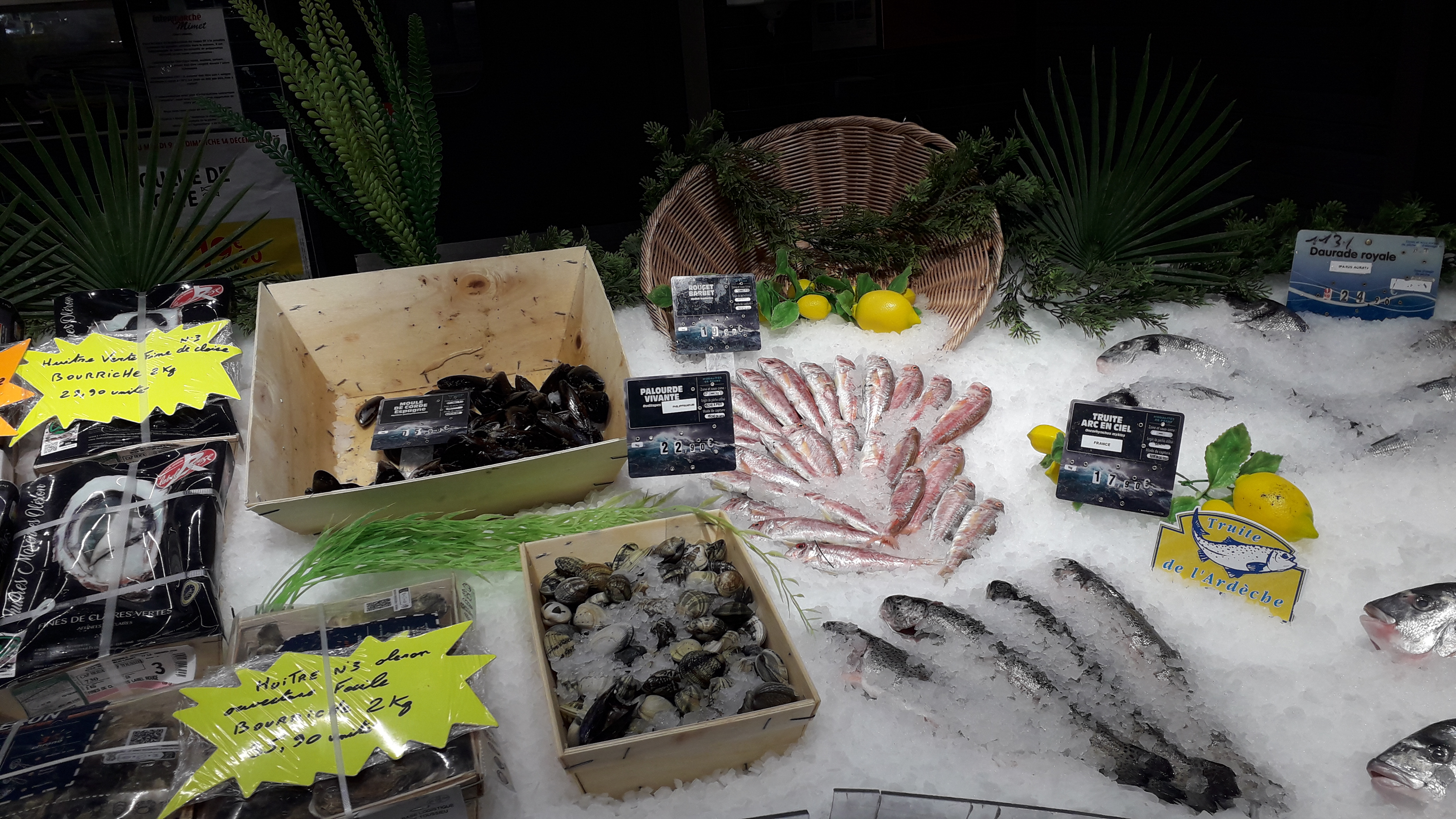
- A neat product presentation, such as using crushed ice on stainless steel trays, enhances the sense of freshness and catches customers’ eyes.
- Align whole fish in the same direction to guide the customer’s gaze.
- Alternating colors to separate white-fleshed fish from colorful fish and shellfish enhances visual appeal.
- Place delicate fish, seafood, and new arrivals at eye level.
- Clean edges, gutters, and floors are part of the overall aesthetic.
Decorative accessories compatible with food safety standards
- Any item that comes into contact with ice or products must be washed, disinfected, and rinsed daily.
- Using wicker baskets or wooden trays to display shellfish improves their presentation, provided they do not come into direct contact with food.
- Incorporating plant elements such as artificial banana leaves and seaweed enhances the aesthetic of the display.
- Lemons, tomatoes, parsley, fruit, or decorative bunches must remain clean, be replaced frequently, and be placed thoughtfully.
- Food safety takes precedence over any visual effect.
Designing the Fish Market’s Window Display and Façade
- The display window is the first impression of your fish market, especially on the street, in a shopping arcade, or in a covered market.
- Clearly display: fish market, seafood corner, seafood deli, oyster bar.
- Showcase new arrivals, promotions, the fish counter, shellfish, and freshness without cluttering the space.
- A well-lit storefront increases appeal and makes it easier for customers to enter.
Create a display window that tells a story
- Vary the themes: local fishing, seafood festivals, holiday menus.
- Use ports, FAO maps, regions, and origins to build trust.
- Add simple recipes to provide ideas for cooking or filleting.
- Plan your displays according to seasons, events, and business needs.
Lighting for the display case and seafood counter
- Well-placed lighting, such as adjustable LED spotlights, highlights the texture of the products and creates an attractive visual contrast, thereby increasing the appeal of seafood.
- Well-placed lighting in a fish counter can highlight the texture of the products and create a warm atmosphere, which is essential for attracting customers.
- Well-placed lighting in a seafood counter can highlight the texture of the products and emphasize their freshness, for example by using adjustable LED spotlights.
- Avoid overly yellow lighting on the flesh.
- Clean and adjust the direction of each light fixture regularly.
Signage: Inform, Reassure, and Guide Your Customers
- Consistent signage improves customer choice, comfort, and confidence.
- According to the DGCCRF, labeling must include the common name, scientific name, origin, production method, and fishing gear used.
- Signs must be legible, moisture-resistant, and easy to clean.
Organize information above and around the display
- Place categories above the counter: whole fish, fillets, shellfish, crustaceans, prepared items.
- Reserve signage for catch of the day, auction arrivals, recommendations, and promotions.
- Display seasonality, origin, and sourcing information using simple charts.
- At the end of the counter, create an advice zone: storage, cooking, labels, and “not for sale” information if useful internally.
Clear and legible labeling for each product
- Choose a font that is legible from the aisle, including for older customers.
- Include the brand name, species, origin, production method, price per kilo, and allergens.
- Harmonize colors, formats, and typography for a professional look.
- “Catch of the day,” “wild-caught,” or “local” add value only if verifiable.
Seasonal decorations and promotional events in the fish market
- Adapting your fish market’s decor to the seasons or events can keep regular customers interested and attract new ones by creating a fresh experience.
- Changing your fish market’s decor based on the seasons or events is an excellent way to keep regular customers interested.
- Plan for January, Easter, summer, back-to-school season, local holidays, and the end of the year.
- Displays should be quick to set up and take down.
Holiday Season and Special Occasions
- During the end-of-year holidays, it’s recommended to add festive touches like string lights or glass ornaments filled with seashells.
- Highlight oysters, scallops, salmon, platters, and set menus.
- Create a clearly marked “takeout” area.
- Remove temporary signage quickly after the event.
Summer atmosphere and holiday seasons
- For the summer and spring months, it’s advisable to use fresh, colorful decorations, such as sea flowers or posters evoking sunny beaches.
- Highlight sardines, skewers, ceviches, tartares, and seafood salads.
- The goal: a welcoming atmosphere, freshness, and a simple shopping experience.
Toward responsible and sustainable decor in the fish market
- Using sustainable materials in fish counter decor can enhance the store’s image and meet consumers’ growing expectations regarding environmental sustainability.
- Opt for reusable items, sustainable signage, and sturdy displays.
- Combine decor, responsible fishing, and clear information to build credibility.
Maintenance, safety, and longevity of the decor
- Clean accessible decor weekly and food areas daily.
- Securely fasten any hanging decor.
- Replace damaged signs, labels, or structures.
- Decor serves the purposes of hygiene, safety, and commercial success.
FAQ – Decor and signage in fish markets
What is the minimum area that needs to be decorated in a small neighborhood fish market?
- Focus on the storefront/window display, the banner above the display counter, and the checkout area.
- Even in spaces under 30 m², a few cohesive elements are sufficient.
- Keep the floors and surrounding areas very clean and uncluttered.
How often should you update the decor in your fish counter?
The basic decor can last several years. Update posters, small decorative items, and featured displays 4 to 6 times a year.
How can you balance decor with hygiene requirements in the preparation lab?
Keep it simple: internal signage, subtle colors, reminders of best practices. Avoid any items that are difficult to clean.
What are the main risks to avoid when decorating a fish counter?
Visual clutter, porous materials, illegible signage, outdated decor, and items that hinder cleaning.
How should the decor be adapted if the fish market shares space with a butcher shop or deli?
Create a color code for each food sector: blue for the seafood side, a different theme for the butchery or deli side. The customer flow remains shared, but each section retains its own identity.
No posts found
Write a review© 2016 - 2026 etal-shops. Powered by CS-Cart and premium theme — © AB: UniTheme2
