


Débit de boisson : Le guide essentiel pour ouvrir votre établissement
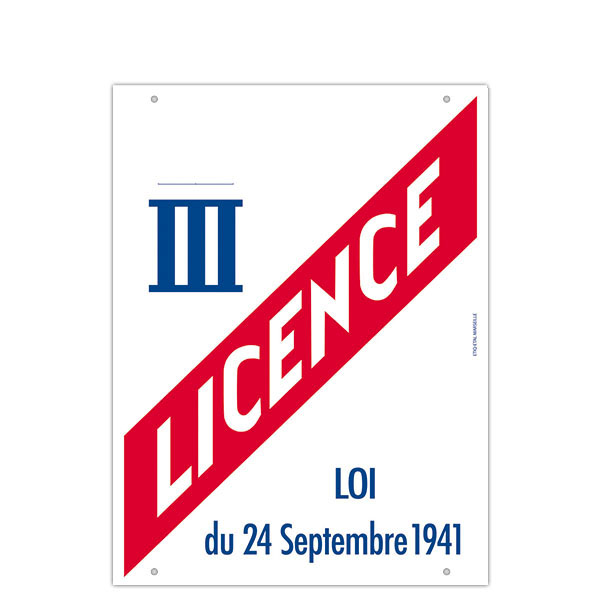
A public house is an establishment that sells alcoholic beverages, either for consumption on the premises or for takeaway. Anyone wishing to open such an establishment must hold a liquor license appropriate to the type of beverage on offer. In particular, there is a Licence III for alcohols up to 18°, and a Licence IV for spirits.
In this guide, we present the different licenses available, the conditions required, the mandatory liquor license including liquor training, and the administrative formalities such as the liquor cerfa. We also look at the specifics of temporary public houses.
Understanding the different liquor licenses
Every establishment selling alcohol must hold a license appropriate to the beverages on offer. The choice depends on two main criteria: the type of alcohol sold and the mode of consumption.
License III for fermented beverages
License III authorizes the sale of non-distilled fermented beverages with an alcohol content of 18° or less. It covers wine, beer, cider, perry, mead, vins doux naturels, crème de cassis, as well as certain wine-based aperitifs and fruit liqueurs. This license is suitable for wine bars, cafés and brasseries that do not sell spirits. Establishments holding this license can sell the drinks corresponding to their category on a takeaway basis. No new establishment is required, as this license is obtained free of charge by administrative declaration.
Licence IV for spirits
The license IV allows the sale of all alcoholic beverages authorized in France, including spirits with a strength of over 18°. This includes spirits such as rum, vodka, whisky, gin, calvados, cognac and pastis. Unlike license III, it cannot be freely created since 2016. You have to buy an existing license IV or transfer one from another commune in the same region. Prices vary according to geographical area and local demand.
Restaurant licenses
Restaurants benefit from two specific licenses that authorize the sale of alcohol only during meals. The petite licence restaurant covers Group 3 drinks, while the licence restaurant allows all types of alcohol to be served. These licenses apply to drinks consumed as accessories to food. A restaurant can serve aperitifs before a meal and digestifs afterwards without breaking this rule. If you wish to sell alcohol outside mealtimes, you need to obtain a license III or IV in addition to your restaurant license.
Takeaway licenses
Grocery stores, supermarkets and wine cellars use takeaway licenses. The small takeaway license authorizes the sale of Group 3 beverages, with no limit on quantity, except for wholesalers. The takeaway license allows the sale of all authorized alcoholic beverages, including spirits. These licenses prohibit all consumption on the premises. The sale of alcohol by vending machine remains prohibited in France. To sell alcohol between 10pm and 8am, specific training is required.
Classification of beverages by group
Beverages are divided into groups according to their alcohol content:
- Group 1 : non-alcoholic beverages such as mineral water, fruit juices, soft drinks, coffee and tea.
- Group 3 : non-distilled fermented beverages up to 18° pure alcohol, including wine, beer, cider and fruit liqueurs.
- Group 4 : rums, alcohols distilled from wine, cider or fruit, with specific sweetening criteria
- Group 5 : all other alcoholic beverages not included in the previous groups.
Group 2 was abolished on January 1, 2016, and its beverages transferred to Group 3. This simplification facilitates administrative procedures for operators.
Conditions required to open a public house
To obtain a liquor license, a number of strict legal criteria must be met. These conditions are designed to regulate the business and protect public health.
Nationality and capacity requirements
To operate a public house, you must be a French national, a citizen of a European Economic Area country (European Union, Iceland, Norway, Liechtenstein), or a national of a country that has signed a reciprocal agreement with France. The countries concerned include Algeria, Andorra, Central African Republic, Congo Brazzaville, Gabon, Mali, Monaco, Senegal, Switzerland, Togo and the United States. There is no nationality requirement for restaurant licenses.
In the departments of Bas-Rhin, Haut-Rhin and Moselle, only French nationals or nationals of a European Union or European Economic Area state can obtain a license to operate a restaurant.
As regards legal capacity, you must be of legal age or an emancipated minor. You may not be under guardianship.
Criminal record and prohibitions
Certain criminal convictions prohibit you from operating a public house. Common law crimes and pimping offences carry a permanent ban. Other offences carry a temporary ban of 5 years from the date of conviction.
These include theft, fraud, breach of trust, receiving stolen goods, skulduggery, receiving stolen goods, public indecency, running a gambling house, taking illegal bets on horse races, selling counterfeit goods or goods harmful to health, drug offences, and repeat offences of assault and battery and public drunkenness. The ban expires after 5 years in the absence of a new prison sentence.
Protected areas and location restrictions
You can't set up a drinking establishment everywhere. The prefect, by decree, defines protected zones around certain establishments. These protected areas prohibit the opening of group 3 and 4 on-premises premises.
Protected zones extend around stadiums, sports halls, gymnasiums, physical activity and sports facilities, swimming pools, hospitals, clinics, medical centers, addiction treatment and care centers, leisure centers and youth hostels, as well as public and private educational establishments of all levels. The prohibition distance is calculated in a straight line from the main entrance to the protected establishment.
A public house that opens in a protected area despite the ban is liable to a €3,750 fine.
Local limits and quotas
The number of licensed premises per municipality is capped at one for every 450 inhabitants. In a commune of 1,000 inhabitants, only a maximum of 2 bars or licensed premises may be set up.
In tourist towns, quotas are more flexible. The calculation takes into account the number of tourists who can be accommodated in the commune, including hotels, tourist residences, furnished tourist accommodation, campsites and vacation villages. To facilitate the relocation of cafés in towns with fewer than 3,500 inhabitants, new IV licenses may be created.
Drinking establishment license: mandatory training
Anyone declaring the opening, transfer or relocation of a 3rd or 4th category on-trade establishment must undergo specific training. This obligation also applies to establishments holding a small restaurant license or a restaurant license. You can only obtain your liquor license after completing this compulsory training.
Content and duration of the training course
Training covers a number of regulatory topics. It covers the regulations governing the operation of a public house, the prevention and control of alcoholism, the protection of minors, and the repression of public drunkenness. Participants are taught about narcotics legislation, the principles of civil and criminal liability, tobacco resale, noise control and anti-discrimination.
The course lasts a minimum of 20 hours and must be spread over at least 3 days. Depending on the organization chosen, it can be either face-to-face or by videoconference. The cost of training varies according to the training organization and region, reaching up to around €1,000. The costs are borne by the operator.
If you have 10 years' professional experience as an operator, the training time is reduced to 6 hours. This provision recognizes experience acquired in the field.
Approved training organizations
Only organizations approved by ministerial decree may provide training leading to the issue of an operator's license. Approval is valid throughout France. You can choose your training center from the prefectoral lists available in each département.
Approval is required to guarantee the conformity of the course content, the human and material resources deployed, and the price charged. Training is led by legal experts in the sector, guaranteeing a practical approach in line with regulations.
License validity and renewal
The operating license is valid for 10 years. At the end of this period, participation in a training course to update knowledge extends the validity of the license for a further 10 years. This renewal training lasts a minimum of 6 hours. It updates your knowledge of legislative and regulatory developments over the past decade.
Specific training for night sales
To sell takeaway alcohol between 10pm and 8am, the operator must hold the appropriate sales permit. He or she must also undergo specific training for night-time sales. This training lasts around 20 hours over 2.5 days, and must be attended face-to-face.
It covers prevention and the fight against alcoholism, the protection of minors, the repression of public drunkenness and the fight against noise. At the end of the course, the training organization gives the operator the completed PVBAN permit form. This license is valid for 10 years, and can be renewed by taking a further 6-hour training course.
Administrative procedures for obtaining your license
Once you've obtained your operating permit, you need to complete an administrative declaration to receive your liquor license. This formality is required for any opening, mutation, translation or transfer of an establishment.
Prior declaration to the town hall
You must submit your declaration at least 15 days before the opening of your establishment. This rule also applies to transfers and translations. The competent authority varies according to your location. In most communes, the town hall will receive your application. In Paris, you should contact the Préfecture de Police. In Alsace-Moselle (Bas-Rhin, Haut-Rhin and Moselle), your application is processed by the local prefecture.
However, in the case of transfer by death, the deadline is extended to one month from the date of death. Operating a drinking establishment without prior declaration is an offence punishable by a €3,750 fine. The offence is deemed to continue for as long as the illegal operation lasts.
The cerfa form to fill in
Cerfa form no. 11542*05 is the official declaration document. It requires you to state your full name, place of birth, occupation and address, the location of the premises, the title under which you operate the establishment, the category of license you are applying for, and your operating permit. This single form is used for on-licenses, restaurants and takeaways.
Documents and supporting evidence required
Your application must include proof of identity and a valid business permit less than 10 years old. For licenses III and IV, you need to enclose a Kbis extract, the company's articles of association if you are a legal entity, the previous receipt in the event of a transfer, and proof of purchase of the license. Restaurant licenses require the same documents, except for proof of purchase. For takeaway licenses, a business permit is not required.
Declaration receipt and deadlines
Once your application has been submitted, the town hall will immediately issue you with a declaration receipt (Cerfa no. 11543*05). This document is proof that you hold a license. The mayor then forwards a copy of your declaration to the public prosecutor and the prefect within three days.
Special cases: temporary drinks outlets and transfers
Certain situations require specific procedures adapted to the particular circumstances of your project.
Authorizations for temporary premises
You can obtain authorization for a temporary outlet for one-off events. Associations are entitled to a maximum of 5 authorizations per year. Approved sports associations may apply for up to 10 authorizations per year, each valid for a maximum of 48 hours. Applications must be submitted to the town hall at least 15 days before the event.
For these temporary outlets, only alcoholic beverages up to 18° proof are authorized. Category 4 spirits remain prohibited. You fill in the Cerfa n°11542*05 form and submit it to the town hall. No operating permit is required for these temporary authorizations.
Mutation: change of owner
A transfer occurs when the owner or operator of the premises changes. The license does not change location, but ownership. You must file a declaration with the town hall, using the same form as for an opening.
Translation: moving within the commune
Translation refers to moving your license from one location to another within the same municipality. This operation requires no specific authorization from the prefecture. You follow the standard declaration procedure at the town hall.
Transfer to another commune
A transfer allows you to move a license to another commune in the département, subject to prefectoral authorization. You submit your request to the prefect of the département concerned by the new location. The prefect consults the mayors of the municipalities concerned before granting or refusing the transfer.
Since the reform, the transfer of a commune's last IV license is now possible, subject to the mayor's approval. This measure prevents the extinction of licenses in rural areas.
The essential steps for opening a public house
Opening a public house can seem complex at first glance, with its multiple licenses and strict regulations. Now that we've clarified the various stages, you'll have all the information you need to get your establishment up and running smoothly.
Start by identifying the right license for your project, then sign up for the compulsory training to obtain your operating permit. Once you've taken this step, submit your declaration to the town hall, together with the cerfa form for liquor outlets, at least 15 days before opening.
With careful preparation and compliance with administrative formalities, your establishment will be able to welcome its first customers in no time.
Frequently asked questions about liquor licenses
What's the difference between a licence III and a licence IV for a public house?
The licence III authorizes the sale of non-distilled fermented beverages with an alcohol content of up to 18° (wine, beer, cider), while the licence IV allows the sale of all types of alcohol, including spirits such as whisky, vodka or rum. Licence III is obtained free of charge by declaration, while licence IV must be purchased or transferred from another commune.
How long does it take to obtain a business license?
Compulsory training to obtain a business license lasts a minimum of 20 hours, spread over at least 3 days. However, if you have 10 years' professional experience as an operator, the training time is reduced to 6 hours. The license is valid for 10 years.
What are the nationality requirements for opening a public house?
You must be a French national, a citizen of a member state of the European Economic Area, or a citizen of a country that has signed a reciprocal agreement with France (such as Algeria, Switzerland, the United States or Monaco). There is no nationality requirement for restaurant licenses.
How long does it take to declare the opening of a public house?
You must submit your declaration to the town hall at least 15 days before the opening of your establishment. This deadline also applies to transfers and translations. The Town Hall will immediately issue you with a receipt, which is proof that you hold a license.
Can I open a public house anywhere in a commune?
No. Certain zones are protected and forbid the opening of public houses. The prefect delimits protective perimeters around schools, health centers, stadiums, swimming pools and youth recreation centers. In addition, there is a limit of one public house per 450 inhabitants per municipality.
No posts found
Write a review© 2016 - 2026 etal-shops. Powered by CS-Cart and premium theme — © AB: UniTheme2
