


Fait maison : ce que cette mention révèle vraiment sur votre assiette
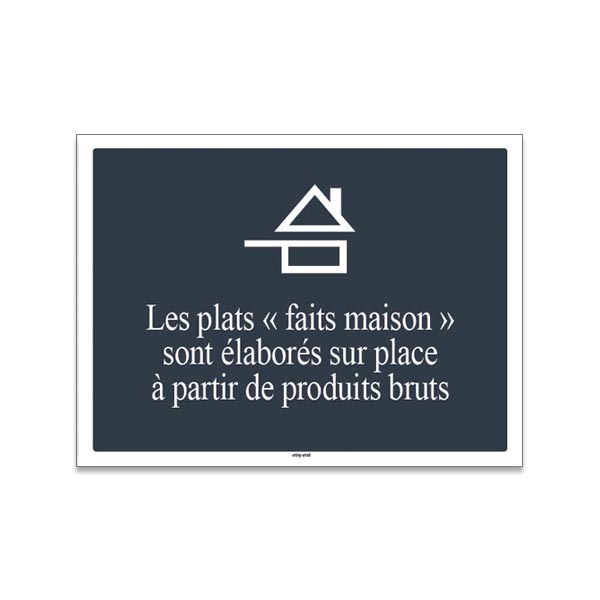
The "fait maison" label appears on many restaurant menus, but do you really know what it guarantees? It's an indication that a dish has been prepared on site using fresh or raw ingredients. Contrary to popular belief, it is not subject to any certification or labeling procedure. In fact, restaurateurs can choose whether or not to display it. In this article, we explain the precise criteria that must be met for dishes to bear this label, how to identify the fait maison logo on the menu, and which types of restaurant are covered by these regulations. Regular checks are carried out to ensure that the label is justified.
What does the Fait Maison label really mean?
The law of March 17, 2014 established a regulatory framework to define fait maison. A dish carries this label when it is prepared on site from raw products. These raw products refer to raw foods that have not undergone any significant modification, without prior heating, marinating or assembly.
The main aim is to distinguish home-cooked meals from ready-to-use industrial dishes that the home-cooked restaurant simply reheats or assembles. This distinction enhances the know-how of cooks and offers consumers greater transparency on their plates.
However, inconsistencies are emerging in the application of this label. Alain Fontaine, President of the Association des Maîtres Restaurateurs, highlights this problem:"Fresh or frozen rib-eye would make a homemade dish. But no, it's not really a homemade dish". In fact, there's no guarantee that so-called "home-cooked" dishes are made entirely on the premises.
More than one in two establishments offers a home-made logo. Last year, nearly one in three addresses inspected showed irregularities.
Criteria for home-made dishes
Three requirements govern the use of this label. Dishes must be prepared on the premises of the establishment where they are served. The use of central kitchens remains prohibited. However, caterers organizing receptions and itinerant establishments may display the Fait Maison logo even if their dishes are made elsewhere.
The regulations authorize the use of certain prefabricated products in the composition of home-made dishes. These are products that the consumer does not expect to see made by the home-made restaurant:
- Cured meats, sausages and charcuterie (except terrines and pâtés)
- Cheeses, fats, cream and milk
- Dried bread, flour and cookies
- Dried or preserved vegetables and fruit
- Pasta and cereals
- Condiments, spices, herbs and concentrates
- Chocolate, coffee, teas and infusions
- Fonds blancs, bruns, fumets and demi-glace
Freezing or deep-freezing is permitted as long as the product remains raw. However, you cannot buy industrial frozen vegetables, as they have often been blanched for freezing. Fruit and vegetables must be bought fresh.
How to identify Fait Maison dishes in restaurants
The Fait Maison logo represents a saucepan topped by a roof with a chimney. This pictogram must be visible to customers, and can appear on menus, menus, slates, shop windows, entrance doors and websites. The graphic charter stipulates that it should only be used in black on a light or colored background, or in white on a dark background, with a minimum size of 5 x 6 mm. The logo can be printed or reproduced by hand on a slate.
The display varies according to three situations. If all dishes are homemade, the homemade restaurant can display the logo only once in a single, visible place, or opposite each dish. If only certain dishes are homemade, the logo must appear opposite each dish on the menu. On the other hand, if no dishes are homemade, the establishment may not use either the logo or the label.
There is no certification procedure for this label. The restaurateur can choose to use it without prior authorization from the authorities. However, DGCCRF agents carry out regular checks. In the event of fraudulent use, the restaurateur risks 2 years' imprisonment and a €300,000 fine.
Key points to understand the fait maison label
The "fait maison" label offers greater transparency for your restaurant meals, provided you know how to decipher it. From now on, you'll know the precise criteria that these dishes must meet, and how to identify the logo on menus.
Keep in mind, however, that this is a voluntary declaration by the restaurant owner. We advise you to pay close attention when you go out, and to ask questions if necessary to better understand what's really on your plate.
Everything you need to know about homemade food
What basic products are permitted for a home-made dish?
A homemade dish must be made from raw or fresh produce, i.e. raw food that has not undergone any significant modification such as heating, marinating or prior assembly. In particular, fruit and vegetables must be purchased fresh.
Is the "fait maison" logo compulsory on restaurant menus?
No, it is not compulsory to display the home-made logo. Restaurateurs can voluntarily choose to use it without prior authorization from the authorities. No certification procedure is required to use this logo.
How do I recognize the fait maison logo on a menu?
The logo represents a saucepan topped by a roof with a chimney. It can appear on menus, menus, slates, shop windows or websites. It must be displayed in black on a light background or in white on a dark background, with a minimum size of 5 x 6 mm.
What prefabricated products are allowed in home-made dishes?
Certain prefabricated products are authorized: cold meats, cheeses, bread, flour, dried vegetables and fruit, pasta, cereals, condiments, spices, chocolate, coffee and cooking stocks. These are products that the consumer does not expect the restaurant to make.
What are the penalties for fraudulent use of the "fait maison" label?
DGCCRF agents carry out regular checks to verify the correct use of the label. In the event of fraudulent use, the restaurateur risks 2 years' imprisonment and a fine of up to €300,000.
No posts found
Write a review© 2016 - 2026 etal-shops. Powered by CS-Cart and premium theme — © AB: UniTheme2
