


Fruit and Vegetable Display: How to Showcase Your Stand with the Right Labels
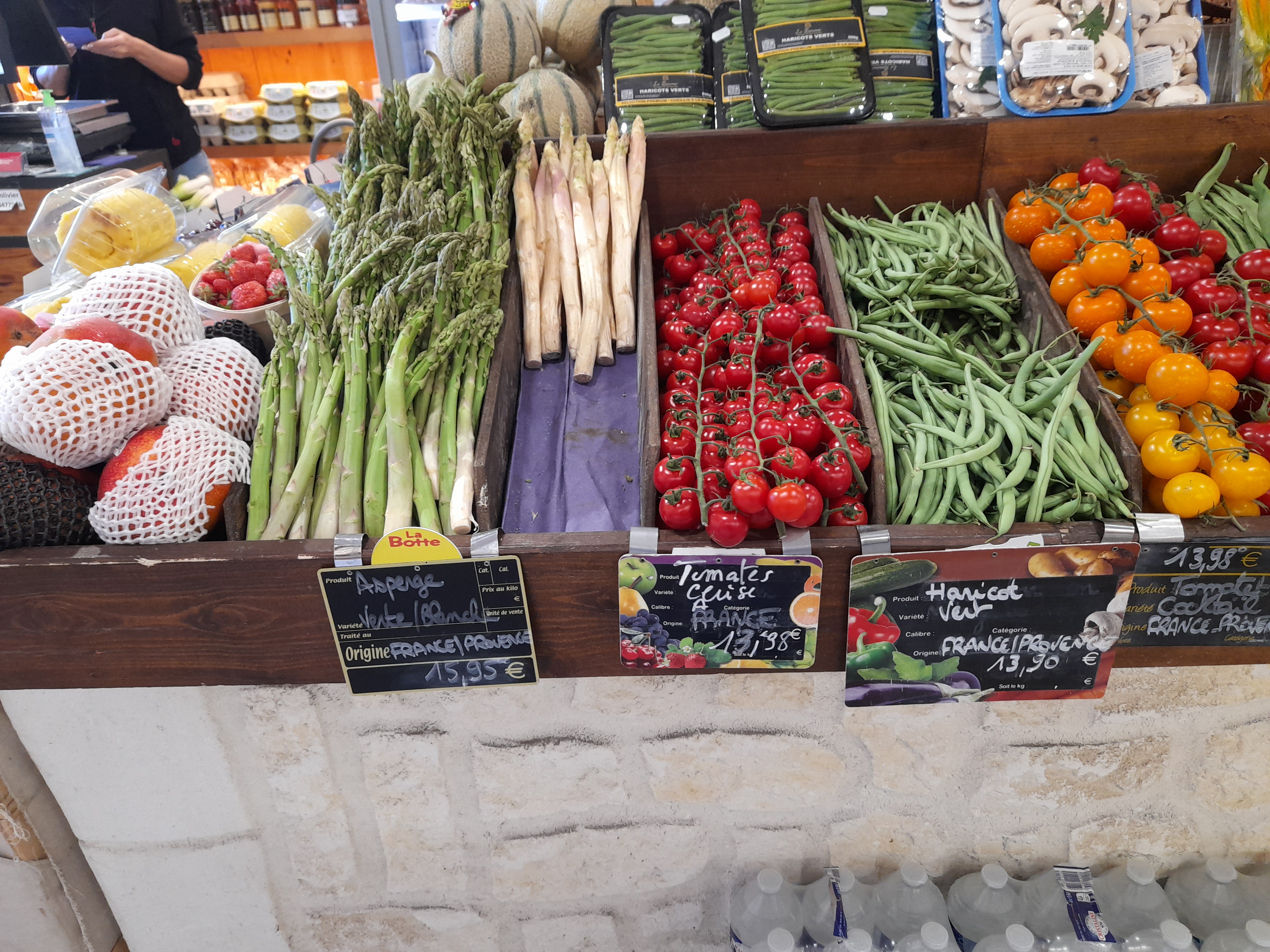
Key Takeaways
- Well-chosen produce displays organize the sales area, catch the eye, and boost sales.
- Clear labels indicating price, origin, variety, category, or size reassure customers and streamline self-service.
- By 2026, labeling must remain compliant: clear origin, price per pound or per piece, category, and size when required by regulations.
- Consistency between fixtures, colors, materials, and signage conveys an image of freshness, quality, and trust.
A produce display: much more than just a display stand
In food stores, the produce section is often seen before the rest of the store. A clean, colorful, and well-labeled display immediately conveys a positive impression of product freshness.
This article is intended for greengrocers, grocery stores, supermarkets, convenience stores, and market vendors. Objective: choose the right furniture, organize the display, ensure proper labeling, and, if necessary, prepare a pre-tax quote or place an order for appropriate signage.
Choosing the Right Fruit and Vegetable Display for an Effective Sales Area
- The main types: wall-mounted, central island, low gondola, market stall, self-service unit, fixed or rolling modules.
- These units help create a smooth customer flow around the products.
- The structures make use of the store’s height to maximize floor sales space.
- The ideal product height should be between 80 cm and 140 cm for accessibility.
- Display units should have sloped shelves, typically between 15° and 35°.
- Display units are designed to optimize product visibility, with sloped levels that make it easy to access and pick up fruits and vegetables.
- Plan for fruits, vegetables, organic items, promotions, local produce, and storage based on your needs, as well as the available width, depth, and dimensions.
Materials and design suited for fresh produce
- Fruit and vegetable display units often use wood, galvanized metal, steel, aluminum, food-grade plastic, or melamine.
- Fruit and vegetable display units are often made from moisture-resistant materials such as galvanized metal, treated wood, or food-grade plastic.
- Metal and treated wood are ideal for their sturdiness and moisture resistance, while offering a natural and warm presentation.
- Wooden display units provide an authentic look and are highly sought after for organic products.
- Display units must allow for natural ventilation and easy maintenance to meet hygiene standards.
- A good fruit and vegetable display stand must be designed to maintain product freshness, often by incorporating deep bins for better ventilation.
- Extended storage in display cases reduces food waste and maintains food freshness.
- To extend the shelf life of fresh herbs and leafy vegetables, a refrigerated display unit is necessary.
- Standard display cases are sufficient for sturdy produce such as onions and potatoes.
Optimize display placement in the store
- Place the display near the entrance or close to the fresh produce section to create a market-like atmosphere.
- Leave enough space for baskets, shopping carts, and shopping movements.
- Position citrus fruits, apples, tomatoes, and brightly colored items along the main aisles.
- Use the sides, fronts, and shelves of the display unit for signage, pictograms, and category labels.
Organizing your produce display: colors, volume, and clarity
An attractive produce section relies on an orderly, colorful, and accessible display, which helps structure the space and highlight the diversity of products.
- It is recommended to group products by family, color, or origin, and to feature seasonal fruits and vegetables on the upper shelves to attract customers’ attention.
- A well-designed display catches the eye and encourages purchases by using techniques such as tiered arrangements, alternating shapes and colors, and directional lighting.
- Sort out damaged produce, manage inventory, and avoid overstocking, which hinders turnover.
Create a smooth and reassuring self-service area
- Bins must remain stable when picked up.
- Place bags, tongs, and baskets nearby.
- Tilt labels so they remain legible while customers are handling the products.
Adapt the display to the seasons and key sales periods
- Spring: strawberries, herbs, baby vegetables.
- Summer: peaches , melons, tomatoes.
- Fall: squash , cabbage, root vegetables.
- Winter: citrus fruits , exotic fruits, soups.
- A sales opportunity can be turned into a promotional event: back-to-school, local producers, seasonal recipes.
The role of labels in enhancing the fruit and vegetable display
The label connects the product, the display, and the customer. It informs, reassures, and triggers the purchase. Include the product name, variety, origin, category, size, and price per pound or per piece. Maintain a consistent graphic style across the entire range: high contrast, clear typography, and a consistent hierarchy.
Comply with fruit and vegetable labeling regulations
- The origin must be clearly visible. The official website outlines the rules regarding the origin of food products.
- The price must specify per kilogram or per piece.
- Category and size apply to products subject to marketing standards, in accordance with EU Delegated Regulation 2023/2429.
- Organic, AOP, IGP, or Label Rouge labels require accurate information.
Choose label holders suited to each type of display
- Placed in front of bins, clipped onto edges, or hung: adapt to the display model.
- For indoor, outdoor, cold, or humid areas, prioritize durability.
- Prepare labels for new products, French origin, local production, and promotions.
Design clear signage to guide customers through the aisle
From the entrance, signage should lead customers to fruits, vegetables, organic, seasonal, salads, or fresh juices. Simple words like “for cooking,” “for snacking,” or “for soup” enhance the experience.
Showcase promotions and featured items
Clearly demarcate the promotional area without obscuring mandatory information. A good solution also tells a story: selection of the month, local producer, storage tips.
Best practices for maintaining and updating labeling
Every day, check for cleanliness, alignment, legibility, and consistency between the register, inventory, and displays. Remove any outdated labels as soon as prices, origins, or varieties change. An internal policy prevents discrepancies between teams.
Train the team in managing the produce section
The team must know the basics: origin, category, price, rotation, cleaning, and repositioning of labels. Personalized advice complements the equipment and strengthens the store’s image.
FAQ – Produce displays and point-of-sale labels
How often should fruit and vegetable labels be updated?
Daily, and immediately if the price, origin, or variety changes. A comprehensive weekly check is still useful.
How should you manage labeling when a single product has multiple origins?
Physically separate the batches and use a separate label for each origin to avoid confusion.
What optional information can help boost sales?
Tips on usage, ripeness, storage, “perfect for compote,” “seedless,” or “rich in vitamin C” help customers make a choice.
How should you handle a sudden stockout?
Remove the label from the out-of-stock product and keep a few blank labels ready to replace it.
Are there best practices for organic sections?
Yes: a dedicated section, a distinct visual identity, physical separation, and the “organic” label reserved exclusively for certified products.
No posts found
Write a review© 2016 - 2026 etal-shops. Powered by CS-Cart and premium theme — © AB: UniTheme2
